
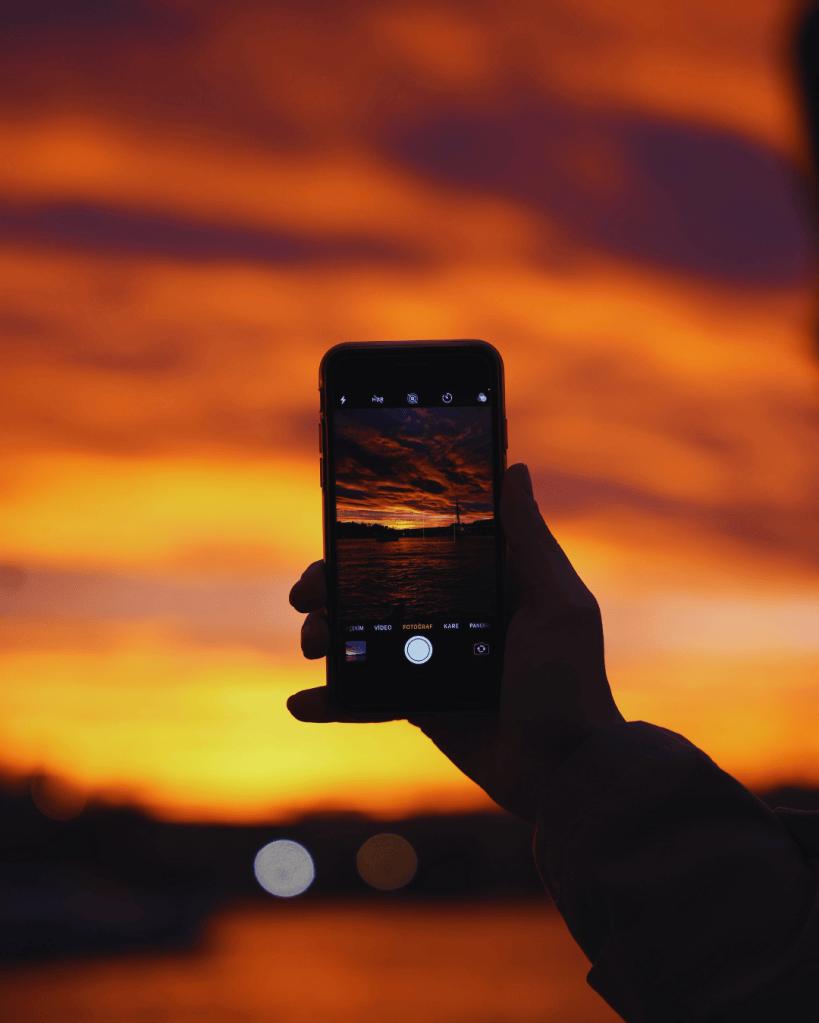
Can you imagine handing someone from the ’50s or ’60s this little, surprisingly heavy, rectangular piece of something or other, and telling them, “You can watch nearly every movie ever made, listen to almost any song and look up the lyrics, read practically any book ever published, research nearly any smidge of information you want. You can read the news from almost any part of the planet. You can calculate numbers. You can translate to and from practically any language. You can order just about any gadget or grocery item, fries or fine dining to your door. Oh, and you can also call anywhere in the world.”
They’d think it was some kind of tiny miracle machine. And it is.
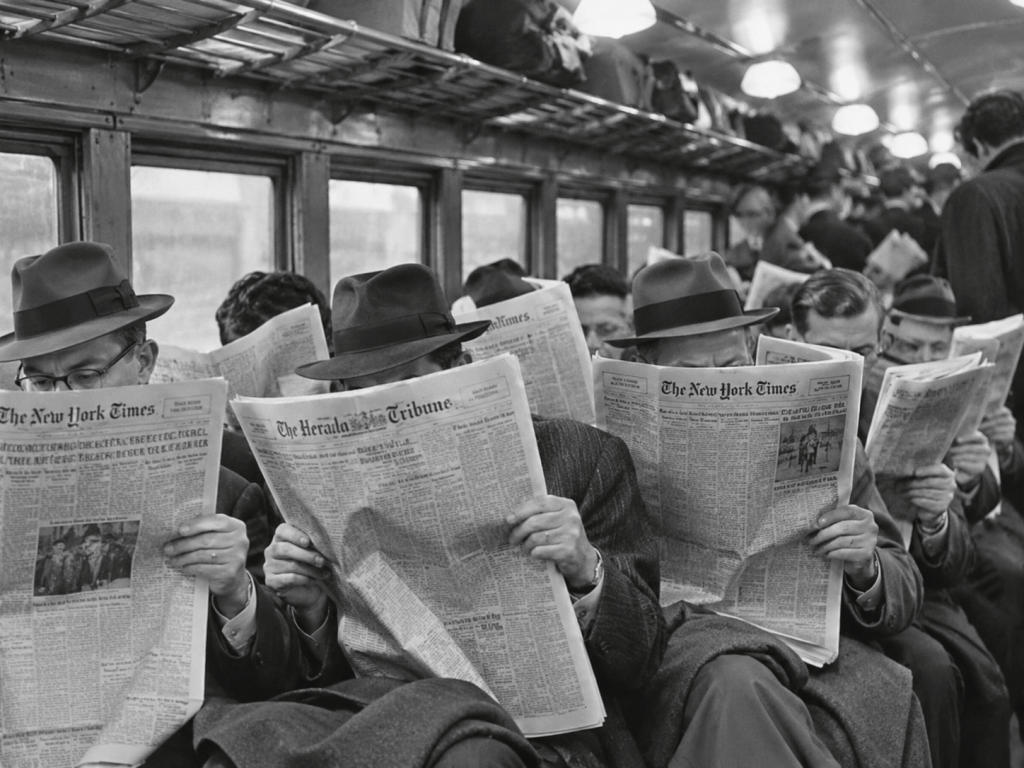
Remember when the commuter trains were filled with people reading the newspaper? Have you seen that photo from the ’50s or ’60s where every single person is reading the paper? Now every single person is looking at a phone and we get so upset. But the lack of connection was back then and there, too.
I’m a world traveler. I’ve done two complete circumnavigations of the globe and have visited 75 countries and all 50 U.S. states. And I can’t believe I did so much of it before smartphones came along. Can you believe we used to send letters to the post offices where our friends would be, like in Kathmandu or Delhi or Paris?
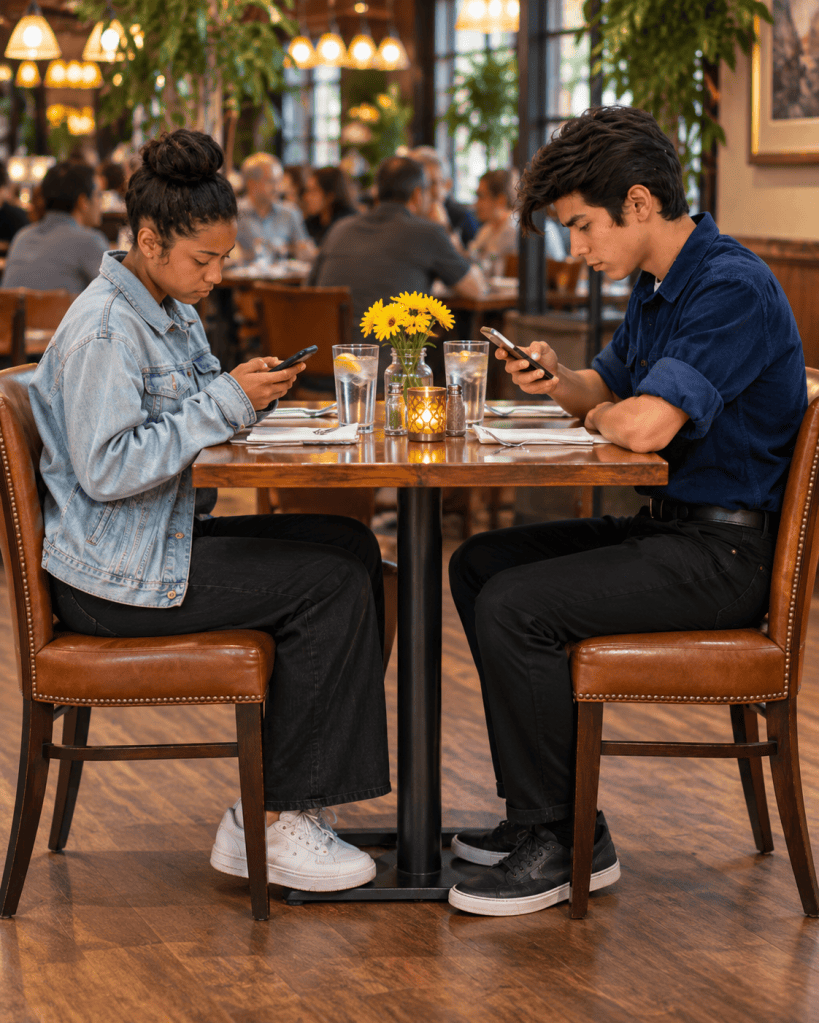
An acquaintance once saw two teens sitting at a restaurant table, texting.
“Why don’t you talk to each other?” he asked them.
“We’re texting each other,” one answered.
Now, as someone who has written words come more quickly, more easily, and oftentimes in a better form than spoken words, I completely understand this. But we still should try. We could use the practice on each other.
I get sad when I see groups of teens or 20-somethings all looking at their phones. I’m also sad when I see a family at a restaurant table, all on their phones. I want to whisper to the parents, “They grow up so fast. Don’t waste these moments!”
We thought we were connecting the world… But we forgot to connect families at the dinner table.”
Those are two lines from two tech executives in my latest novel Valley High, Mountain Low.
In the book, Mariella torches the outwardly fabulous life she built: a top Silicon Valley exec, a drop-dead-gorgeous tech-bro husband, a mansion, millions. It was killing her, and so were the secrets she was keeping inside.
But when she goes back to her childhood home in Colorado to regroup, she finds that the very algorithms she had pushed have followed her there. Her mother has disappeared down rabbit holes, and even goes off to storm the Capitol on January 6 in full-on QAnon regalia. Her teenage nieces are literally disappearing too: withering away from social media’s self-erasure and “thinspo” (inspirational posts for being thin).
There’s much more to the story, of course—grief, forgiveness, reinvention, starting over, even making a new definition of Happily Ever After. But for one of the main plotlines of the novel, I take a look at three generations of women caught in the algorithmic snare, including the one who helped push it on the world.
So much of this is based on the world around me, where technology seems to have taken over. Don’t get me wrong, many aspects of technology and social media are wonderful. They are a balm for loneliness. They are a lifeline during natural disasters and times of war. They give us information we seek in the blink of an eye. AI helps our medical professionals save more lives. The list goes on and on.

But like with all things, the benefits come from being truly in balance. Technology must be our supporting actor, not the star. We are the stars. And there must be a way to lighten the dark shadows we cast from the spotlight shining on us. Phone addiction. The algorithms seeing us and saying, “Oh, she’s back. Alert that one advertiser who wanted her!”
Many people ask me where I got the idea for the book. It started the night before Biden’s inauguration in January 2021, when I saw a bunch of posts on a friend’s Facebook page. One was, “Bye Don thinks he’s going to be inaugurated tomorrow!” It was accompanied by the GIF of Michael Jackson eagerly eating popcorn in a movie theater, taken from the start of the music video for “Thriller.” Another was a repost of a tweet from a man who said something to the effect of, “Keep the faith. This is all part of the plan.” And after Biden was sworn in, the posts told people to still keep the faith despite appearances, all is unfolding as it was meant to, martial law will be imposed soon, and very soon Trump will be back in the White House where he belongs.
I couldn’t believe what I was reading. I knew this woman was estranged from her adult children due to her beliefs. Her online friends were applauding her courage to keep posting these things, and to the few who were aghast, she wrote, “This is my page. I’ll post what I want. If you don’t like it, go elsewhere.” And that got more applause from her cohorts, more dopamine hits.
I didn’t know as much about the algorithms back then, how they take us farther and farther down those rabbit holes. And of course people can find solace in a community of people who have experienced what they have. But the algorithm’s job is to keep them online… so they would buy stuff… so the platforms can show the advertisers the high level of engagement.
So that was the impetus. And like all my stories, it took on a life of its own.
Now, I’m not talking from a place on high over here. I’m one of the phone people too. It’s always by my side, and it allows me to take photos of another spectacular Colorado sunset or the elk and wild turkeys that are crossing my path. I record and edit videos on it, one of my favorite things to do. I read, watch movies, and do Wordle on it. I keep in touch with friends all over the world via social media. Oh, and occasionally I call someone (but not very often). LOL.
My husband and I have an agreement: no phones at the table. HOWEVER! As soon as one of us gets up and leaves for a few minutes, the other one grabs that dern phone.
I have an excuse. My work is on that phone. The idea for my last book came from that phone.
A dear friend’s two 20-something daughters and their circle of friends have made an agreement to turn off and put away their phones when they get together for nights out and parties. Thank goodness. From the mouths, minds, hearts, and actions of our babes. It gives me hope.
What are these agreements giving us? Ohhhhh, could it be…real connection? That thing we all say we crave?